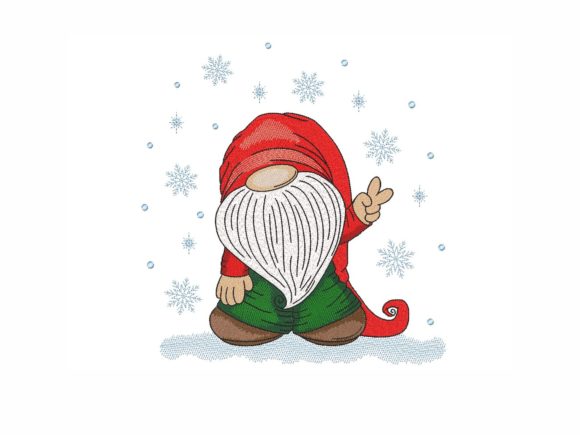
Winter Gnome: A Festive, Flexible Holiday Embroidery Design
First Impressions: Cozy, Playful, and Instantly Recognizable
As an embroidery designer who’s built seasonal collections for over a decade, my first reaction to Winter Gnome was immediate warmth—like opening the oven door on a fresh batch of gingerbread. This isn’t a stiff, overly formal Christmas motif. It’s soft-edged, gently whimsical, and radiates quiet joy. The design leans into rustic charm without veering into kitsch, balances detail with clarity, and carries that rare emotional tone: peaceful festivity. It feels handmade, not mass-produced—ideal for small shop owners and Etsy sellers who want their products to stand out in crowded holiday feeds.
Real-World Seasonal Use: Where Winter Gnome Shines
Winter Gnome thrives across informal, gift-ready categories where personality matters more than polish. On sweatshirt embroidery? Perfect—it reads clearly at 3.5–4 inches wide and keeps its charm even after multiple washes. For tote bag design, it anchors beautifully near the bottom corner or centered on the front panel, especially when paired with subtle snowflakes or “Joy” in a coordinating script. Kitchen towel embroidery benefits from its friendly scale: no fussy details get lost in terry loops, and the gnome’s rounded features soften the utilitarian feel of cotton toweling.
Pillow covers and aprons gain instant seasonal appeal with Winter Gnome—it’s cozy enough for farmhouse decor but modern enough for minimalist interiors. Baby onesies and burp cloths? Yes—if stitched with ultra-soft thread and tested for skin sensitivity. As an embroidered patch, it holds up well on denim jackets and holiday-themed backpacks. And for gift bundles? Pair it with cinnamon-scented sachets, mini mugs, or handmade ornaments for a cohesive, story-driven offering that customers photograph and share.
Smart Placement & Practical Limits
Not every surface is ideal—and knowing where Winter Gnome works best saves time and thread. Avoid using it below 2.75 inches in hoop size unless you’ve verified stitch density holds up; tiny noses or hat brims can blur or skip on low-res machines. Thick kitchen towels and heavy linen table linens demand extra stabilizer—cutaway or tear-away blends work best, not just basic iron-on. Dark fabric requires testing thread colors: creamy off-whites and muted reds pop better than stark white or neon accents. Metallic thread? Use sparingly—only for the hat pom-pom or scarf fringe—to avoid breakage and stiffness.
Stretchy garments like ribbed knit baby caps or curved baseball-style caps need careful hooping and light stabilizer backing. Repeated washing tests are essential if selling finished product—especially for personalized gift items meant for daily use. And while Winter Gnome reads beautifully on flat surfaces, avoid placing it across deep seams or highly contoured areas (like shoulder yokes) unless you’ve mocked it up on a real garment first.
Emotional Impact & Holiday Market Fit
Holiday shoppers don’t just buy designs—they buy feeling. Winter Gnome delivers calm celebration, not frantic cheer. That makes it powerful for slow-holiday branding: think “quiet Christmas,” “cozy winter,” or “family-first festivities.” It boosts perceived value without demanding premium pricing—customers see craftsmanship, not clutter. On Etsy listings, it increases dwell time: shoppers pause, smile, imagine it on their favorite sweater. At craft fairs, it draws families—kids point, grandparents nod, and buyers remember your booth because the design felt *human*, not algorithmic.
For social media previews and printable mockups, Winter Gnome scales elegantly across formats. It looks intentional on Instagram carousels, clean on Pinterest pins, and warm in email banners. Its visual recognition builds brand consistency across seasonal drops—even without a logo, customers begin associating that gentle gnome silhouette with your shop’s thoughtful curation.
Designer Notes You Can’t Skip
- Always test thread colors on both light and dark fabric swatches before bulk production—what reads as “rosey cheek” on ivory may vanish on charcoal.
- Check stitch density in the beard and scarf textures—overly dense fills can pucker lightweight fabrics or obscure detail on textured weaves.
- Confirm hoop size compatibility before listing. If your machine maxes at 4x4”, verify the design fits cleanly—or offer two versions (standard + simplified).
- Use proper stabilizer matched to fabric texture: cutaway for knits, tear-away for stable wovens, fusible for nap-free linens.
- Create realistic mockups—not just flat white backgrounds. Show Winter Gnome on a steaming mug, folded towel, or unzipped hoodie to spark buyer imagination.
- Review small details post-stitch: trim stray threads around the hat brim and scarf ends—those tiny touches define professional finish.
- Plan matching color palettes across your collection: if Winter Gnome uses sage, cream, and brick, carry those into your packaging, tags, and social posts.
- Confirm commercial licensing before selling finished seasonal products—this is non-negotiable for small shop owners relying on digital embroidery file integrity.
Final Thought: A Timeless Seasonal Anchor
Winter Gnome isn’t just another holiday embroidery file—it’s a versatile, emotionally resonant asset for makers who understand that seasonal success isn’t about volume, but resonance. It bridges generations (grandparents love the nostalgia, kids love the playfulness), supports multiple price points (from $12 patches to $85 pillow sets), and adapts effortlessly across handmade gift formats. Used intentionally—with attention to fabric, thread, and customer context—it earns repeat orders, word-of-mouth referrals, and shelf space in homes long after New Year’s Day. That’s not just festive. That’s sustainable seasonal design.