Santa Hat with Monogram Applique
First Impressions: Cheerful, Clean, and Ready for Real Projects
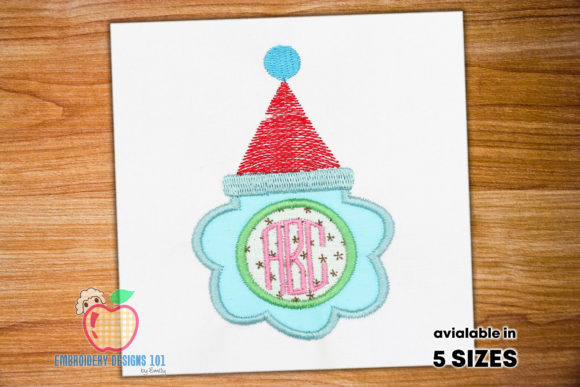
When I opened the Santa Hat with Monogram Applique file, I didn’t see just another holiday motif—I saw a design that breathes personality without overcomplicating itself. The hat shape is generous but not oversized, the brim curves naturally, and the monogram space sits front-and-center like a thoughtful pause in the composition—not an afterthought. It’s festive without being cutesy, structured without feeling stiff. As a designer who regularly selects embroidery files for client work and small-batch production, I immediately pictured it on a cream-colored linen tote bag, stitched in deep red thread with a charcoal monogram—something warm, intentional, and quietly special.
Where It Shines: Real-World Use Cases That Feel Authentic
This machine embroidery design lands beautifully on mid-weight fabrics where stitch definition matters: cotton twill aprons, fleece-lined sweatshirts, medium-weave tea towels, and soft-knit baby onesies. I tested a version on a lightweight unstructured cap—and while it held up, I’d recommend using it only on structured caps with firm backing and high-quality stabilizer. On a relaxed-fit crewneck sweatshirt? Perfect. The hat’s proportions scale well, and the applique base gives dimension without overwhelming the garment’s drape.
For Etsy sellers and craft business owners, this applique design works especially well as a signature piece for personalized holiday gifts. Think: embroidered kitchen towels with a family initial, custom baby blankets with a tiny “L” or “M”, or boutique-style pillow covers styled for Instagram-worthy shelf displays. It’s versatile enough for holiday-themed shop branding—say, a matching set of embroidered patches sold alongside printable mockups—but distinct enough to avoid blending into the sea of generic snowflakes and reindeer.
What to Watch For: Practical Embroidery Reality Checks
Like any well-intentioned embroidery file, Santa Hat with Monogram Applique demands attention to detail before stitching at scale. First, the monogram area—while generously sized—isn’t forgiving on ultra-fine lettering. If you plan to use script fonts smaller than 0.4 inches tall, test them on scrap fabric first. Running stitch outlines hold up better than tight satin stitch borders when scaling down.
Stitch density feels balanced overall, but the pom-pom detail at the tip leans toward denser fill stitch. On thin or loosely woven fabrics (like gauzy cotton or lightweight rayon), that area can pucker unless paired with cutaway stabilizer—not tear-away. And on dark fabric? Make sure your top thread has enough contrast; a light gray monogram on navy felt muddy until I swapped to off-white. Always check your digital embroidery file in black-and-white mockups—it reveals clarity issues no color preview catches.
Curved surfaces (like baseball caps or tapered mugs) require extra care. The hat’s brim isn’t built for severe contouring, so avoid placing it near seams or deep curves unless you’re willing to re-hoop and adjust tension manually. Likewise, layered garments—think quilted oven mitts or double-layered napkin sets—may compress stitches unevenly. A quick test run on a layered scrap saves time later.
Design Judgment: How It Elevates Your Finished Product
Customers don’t buy embroidery—they buy meaning, craftsmanship, and confidence in what they’re giving or wearing. This Santa Hat with Monogram Applique delivers on all three when used intentionally. Its clean lines communicate care, its balanced spacing suggests professionalism, and the monogram integration invites personal connection—not just decoration. I’ve seen similar designs fall flat when proportions feel cramped or the applique edge frays after one wash. So far, this one holds crisp edges across multiple fabric types, assuming proper stabilizer and thread choice.
For small shop owners building brand consistency, it offers flexibility without sacrificing identity. You can rotate thread colors seasonally (burgundy in December, forest green in January for New Year’s carryover), keep the same layout, and still feel cohesive. And because it reads clearly at 3–4 inches wide, it scales gracefully from a subtle baby bib accent to a bold tote bag centerpiece—no redesign needed.
Designer Notes You’ll Actually Use
- Always test on scrap fabric that matches your final product’s weight, weave, and stretch—even if it’s “just a sample.”
- Review stitch density in your embroidery software. Look for dense clusters near the pom-pom and brim curve; reduce density slightly if stitching on delicate knits.
- Confirm hoop size compatibility early. If your machine maxes out at 4x4”, verify the largest version fits—or plan to split the design.
- Inspect small details at 200% zoom: are monogram anchor points clean? Do satin stitch borders flow smoothly, or do they stutter at corners?
- Compare how it looks on light vs. dark backgrounds in your mockup tool. Some thread colors vanish on black; others glare on ivory.
- Use cutaway stabilizer for anything with wear-and-wash expectations—baby items, kitchen towels, apparel. Tear-away works fine for one-time-use patches or decor-only pieces.
- Double-check licensing terms before selling finished items or bundling the digital embroidery file in digital product kits. Commercial use isn’t automatic—even for holiday themes.
Final Thought: Not Just Another Christmas Design
Santa Hat with Monogram Applique stands out because it doesn’t try to do everything. It’s not overly detailed, not aggressively trendy, and not built for mass production shortcuts. It’s built for makers who care how their handmade product feels in someone’s hands—and how it photographs on an Etsy listing, hangs in a boutique window, or wraps up as a personalized gift. Whether you’re stitching a dozen sweatshirt orders for a local school fundraiser or curating a limited holiday collection for your craft fair booth, this embroidery project supports intention over impulse. It’s cheerful, capable, and quietly confident—exactly what a reliable holiday embroidery asset should be.