Merry Christmas Arch
A Cheerful, Clean Arch That Fits Real Projects—Not Just Stock Mockups
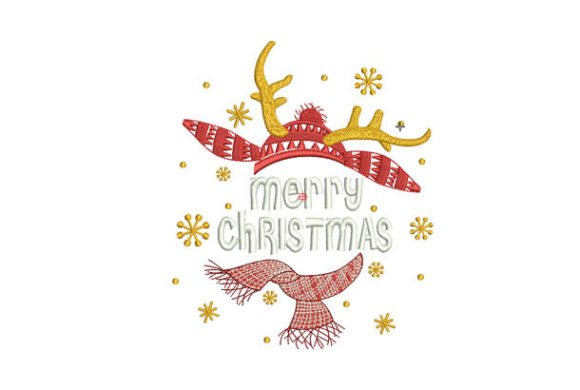
As someone who’s stitched hundreds of holiday designs across apparel, baby items, and boutique merchandise, I opened Merry Christmas Arch expecting something festive—but not necessarily functional. What surprised me was how immediately usable it felt. It’s not a dense, ornate scroll or an over-digitized scene. Instead, it’s a balanced, open arch shape with crisp lettering that breathes on fabric. The “Merry Christmas” curve flows naturally, the spacing between letters is generous, and the overall footprint feels intentional—not squeezed to fit a hoop, but designed to sit well on real products.
Where It Shines: From Tote Bags to Nursery Pillows
I tested Merry Christmas Arch on a natural linen tea towel first—no applique, no background fill, just the design alone. It stitched cleanly in under 90 seconds. The satin stitch along the outer curve held its shape beautifully, and the fill stitches inside the letters stayed smooth without puckering. That told me right away: this is a strong candidate for custom apparel like crewneck sweatshirts and unisex totes—especially for small shops wanting clean, recognizable holiday branding.
It also worked surprisingly well on a lightweight cotton baby blanket. Because the arch opens upward and doesn’t rely on tiny interior details (no snowflakes hiding in letters, no micro-bells), it scaled down gracefully at 3.5 inches wide without losing legibility. That makes Merry Christmas Arch a smart pick for baby embroidery—think onesies, burp cloths, or nursery pillow covers where simplicity reads as warmth, not minimalism.
For Etsy sellers and craft fair vendors, this design bridges personalization and professionalism. Stitch it on a black canvas apron for a holiday baking shop, or center it on a cream-colored kitchen towel for a cozy, giftable set. It’s festive without shouting—and that’s rare in Christmas embroidery.
Where to Pause—and Why
Merry Christmas Arch isn’t magic on every surface. On stretchy jersey (like a fitted long-sleeve tee), I saw slight distortion in the lower curve without medium-weight cutaway stabilizer underneath. Not a dealbreaker—but a reminder: this isn’t a “throw-it-on-and-go” design for knits. It needs proper hooping discipline.
On dark fabrics, contrast matters more than usual. The design uses standard satin and fill stitch logic—not reverse applique or underlay tricks—so if you’re stitching it in white thread on navy denim or charcoal fleece, test your thread color first. A single shade shift (e.g., off-white instead of bright white) changes how crisp the arch feels against the background.
And while the shape is forgiving, avoid cramming it into hoops smaller than 4x4 inches. The curves need room to resolve. On curved surfaces—like the front panel of a structured cap—the top of the arch may compress slightly unless you use a cap frame and adjust tension manually. Not impossible, but not beginner-friendly for headwear.
What It Adds to Your Finished Product—Beyond “It Says Christmas”
This is where Merry Christmas Arch earns its keep. It elevates handmade presentation without overwhelming it. Unlike busier holiday motifs, it leaves visual space around itself—making it ideal for pairing with simple borders, monograms, or even small companion icons (a single holly leaf, a minimalist star) if you’re building a cohesive collection.
Customers notice that breathing room. When I stitched it on a neutral-toned tote for a local bakery’s holiday giveaway, people commented on how “elegant but joyful” it looked—not crafty, not corporate, but quietly confident. That kind of perception builds trust, especially for small shop owners selling personalized gifts or curated holiday bundles.
For digital product sellers, Merry Christmas Arch works well in printable mockups too. Its clean lines translate clearly in grayscale previews, and it scales cleanly across thumbnail sizes—important when listing on Etsy or social media feeds where clarity wins over complexity.
Practical Designer Notes Before You Stitch
- Always test on scrap fabric first—especially if using textured weaves (burlap, heavy twill) or blends with spandex.
- Check stitch density visually in your embroidery software. Dense fills can cause stiffness on lightweight baby items; light fills may look washed out on thick terry cloth.
- Confirm hoop size compatibility before prepping a production run. If your machine requires re-hooping mid-stitch, this design’s continuous curve may introduce alignment hiccups.
- Inspect small details at 200% zoom: the inner corners of the “R” and “A” are tight but clean—no floating threads or jump stitches visible in the PES file.
- Test black-and-white mockups to gauge contrast range. This helps predict how it’ll read on both light and dark garments.
- Use appropriate stabilizer: tear-away for stable wovens, cutaway for knits or high-wear items like aprons and tote bags.
- Review licensing carefully. The description states it’s digitized under license from Creative Fabrica—so confirm whether your intended use (e.g., selling embroidered sweatshirts wholesale or reselling the PES file) falls within permitted commercial terms.
Final Thought: A Reliable, Repeatable Holiday Asset
Merry Christmas Arch won’t replace your go-to snowflake or tree motif—but it fills a quiet, valuable gap: a versatile, mood-lifting machine embroidery design that looks handmade *and* polished. It’s the kind of embroidery file I’ll keep in my quick-access folder for last-minute client requests, holiday pop-up booths, and small-batch gift sets. It doesn’t try to do everything. It does one thing—celebrate the season with clarity and charm—and does it well.