Joy to the World: A Craft Fair Designer’s Real-World Review
First Impression: Festive, Delicate, and Instantly Recognizable
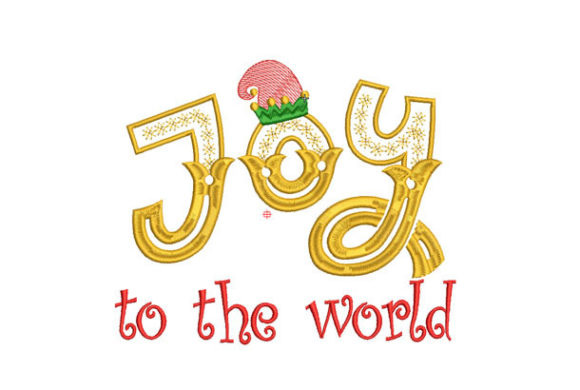
“Joy to the World” lands with quiet confidence—not loud or cartoonish, but warmly festive and unmistakably Christmas. It reads as elegant rather than kitschy, delicate rather than dainty, and traditional without feeling dated. That matters on a crowded craft fair table where shoppers scan in under three seconds. This isn’t a “funny Santa” or “ugly sweater” design—it’s the kind that draws the 35–65 demographic who values handmade quality, seasonal meaning, and subtle sophistication. For Etsy sellers and boutique makers, that’s gold: it signals intentionality, not impulse.
Where Joy to the World Shines on Craft Fair Products
This machine embroidery design excels where charm meets utility—and clarity holds up at real-world viewing distances.
- Tote bag design: Perfect centered on the front panel of natural canvas or oat linen. Large enough to read from six feet away, small enough to leave room for branding or a coordinating monogram.
- Apron embroidery: Ideal above the pocket or centered on the bib—its balanced composition avoids visual heaviness, even on full-wrap cotton twill.
- Tea towel embroidery: Works beautifully in the lower corner or along the hem. The “delicate” quality shines here—especially on textured flour-sack cotton, where fine stitching reads as refined, not fragile.
- Embroidered patch: Highly adaptable. Stitched onto denim jackets, market bags, or kids’ backpacks, it adds instant holiday warmth without overwhelming.
- Pillow cover & fabric pouch: Makes a strong gift-ready impression—especially when paired with red or forest green thread on cream or charcoal linen.
It’s less effective on curved surfaces like caps (unless scaled down significantly) or ultra-dense fabrics like heavy duck canvas, where stitch density may cause puckering or loss of definition.
What Buyers Notice—And What They Buy
In person, Joy to the World stands out because it feels *intentional*. Not every holiday design earns that. Shoppers pause longer when typography is legible, spacing feels generous, and the overall shape invites the eye—not fights it. At a craft fair, that pause often becomes a purchase. On Etsy, it performs well in listings with clean printable mockups: the phrase reads clearly even in thumbnail size, supporting strong SEO around “Christmas embroidery file,” “holiday tote bag design,” and “small shop product.”
As a commercial embroidery asset, it scales reliably across batch production—no tiny lettering, no micro-details that vanish at 3” width. That means fewer re-hooping delays, consistent thread tension, and faster turnaround for holiday orders.
Careful-Use Notes Every Embroidery Designer Should Check
“Delicate” doesn’t mean fragile—but it does demand attention to execution:
- Dense stitch areas: Confirm the embroidery file doesn’t pack too many satin stitches into tight curves—this can cause thread breakage on high-speed machines or stiffness on soft fabrics.
- Fabric texture: On highly napped or looped towels, test stitch density first. What reads as delicate on smooth cotton may blur on terry cloth.
- Dark fabric: Use high-contrast thread colors. White or ivory thread on navy or charcoal linen elevates perceived value—but only if stitch coverage stays full and even.
- Small sizes: Avoid shrinking below 2.5” wide. Letterforms and spacing are designed for readability—not miniaturization.
- Curved surfaces: Skip direct cap embroidery unless you’ve tested on scrap with proper cap hoops and stabilizer layers.
How Joy to the World Strengthens Your Booth & Brand
This isn’t just another Christmas embroidery file—it’s a cohesion tool. When stitched consistently across your tote bags, tea towels, and pillow covers, Joy to the World creates visual rhythm across your display. That consistency builds trust: shoppers recognize your aesthetic, remember your booth, and return next season. It also supports brand storytelling—pairing the timeless phrase with natural fibers and thoughtful construction says, “I make things that last, not just things that sell.” For small shop owners and digital sellers, that narrative translates directly to higher average order value and repeat customers.
Practical Embroidery Designer Notes Before You Stitch
Before cutting your first production fabric, do these six things:
- Test the machine embroidery design on scrap fabric matching your final product—same weight, same weave, same dye lot.
- Check thread contrast under natural light *and* booth lighting. What looks crisp in daylight may wash out under warm craft fair bulbs.
- Review spacing between letters and elements. Tight kerning saves space—but can sacrifice legibility at arm’s length.
- Confirm hoop size compatibility. If your embroidery file requires a 5x7 hoop but you’re using 4x4 machines, adjust or source a resized version.
- Inspect stitch density visually—not just in software. High-density fills need heavier cutaway stabilizer on lightweight fabrics; lightweight designs need tear-away on stable cottons.
- Create at least one real mockup—not just a digital printable mockup. Drape it, hold it, photograph it in context. Does it feel like a finished product? Or a placeholder?
Finally: verify commercial licensing terms before selling any finished product. Since this is marketed as a machine embroidery design for handmade markets, confirm whether resale rights apply to physical goods—or only digital embroidery file distribution.
Final Thought: Joy to the World Is a Quiet Workhorse
It won’t shout. It won’t trend-jack. But Joy to the World delivers steady performance across your most profitable craft fair products—tote bags, tea towels, aprons, patches, and giftable pouches. It photographs cleanly, stitches reliably, and resonates emotionally without leaning on cliché. For embroidery business owners building a sustainable handmade brand—not just seasonal inventory—this is the kind of Christmas embroidery design that earns repeat orders, booth referrals, and Etsy favorites. Just remember: its delicacy is its strength, not its limitation. Respect the details, honor the fabric, and let the joy speak for itself.