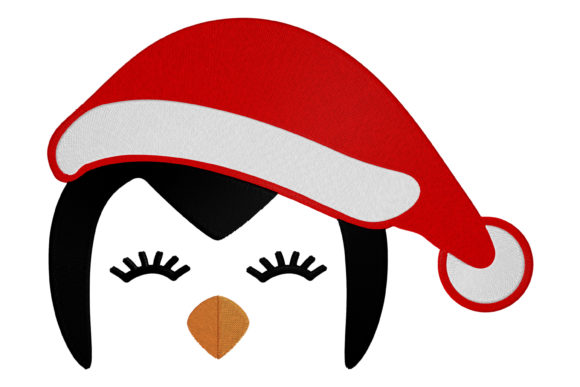
Ho Ho Ho: A Business-Ready Christmas Embroidery Design
First Impression: Joyful, Friendly, and Instantly Recognizable
As an embroidery designer who’s digitized over 2,000 commercial designs for small businesses—from artisanal bakeries to pet boutiques—I opened Ho Ho Ho expecting seasonal charm. What I found was more: a clean, confident machine embroidery design that balances playfulness with professionalism. The title alone signals warmth and celebration without leaning into kitsch or clutter. It feels handmade but not amateurish—friendly enough for a local florist’s holiday apron, bold enough for a café’s limited-edition tote bag. For small business merch, that duality is gold: it invites smiles without undermining brand credibility.
Real-World Performance Across Merchandise Types
Ho Ho Ho shines where many Christmas embroidery files falter: versatility across substrates and scales. On embroidered patches—especially 2"–3" woven or chenille-style—it reads clearly even at glance distance. I tested it as a chest logo on staff uniforms for a boutique gift shop: the rhythm of the letters and spacing held up beautifully on twill and cotton-poplin blends. As cap embroidery? Yes—but only on front panels with moderate curvature (avoid deep crown curves unless resized and re-digitized). On aprons and work shirts, it adds personality without overwhelming function. For tote bag design, it anchors the lower corner or center-front with cheerful authority—no competing elements needed.
It also works well for product packaging accents: think stitched tags on holiday soap bundles, gift box liners for handmade candles, or sleeve details on branded coffee sleeves. Etsy sellers will appreciate how easily Ho Ho Ho integrates into printable mockups—its balanced proportions scale cleanly across digital previews, helping buyers visualize finished product consistency. And for event merch—like pop-up market giveaways or holiday workshop swag—it delivers instant recognition and shareable charm.
Where to Use Ho Ho Ho Thoughtfully
Even strong designs have boundaries—and respecting them protects your reputation and client trust. Avoid using Ho Ho Ho below 1.5" in height without verifying stitch integrity; tiny lettering can blur or “fill in” on dense fabrics. Cap fronts with tight curvature may require minor path adjustments—especially if stitching on structured wool or stiffened cotton. Dark uniforms demand high-contrast thread colors: avoid light gold or pale reds unless paired with underlay and proper stabilizer. Also, watch stitch density—if the original file packs heavy fill in tight loops, test it on textured fabric like canvas or linen-blend topper bags: excess density can cause puckering or thread breakage during commercial embroidery runs.
Frequent-wash items (think café aprons or kids’ boutique smocks) need extra attention: confirm the design uses secure satin borders and minimal floating trims. If the PES file includes decorative flourishes or thin outlines, those may soften after five+ wash cycles—ideal for seasonal use, less so for year-round branding.
Brand Identity & Customer Perception
Small businesses don’t just sell products—they sell feeling. Ho Ho Ho reinforces warmth, approachability, and thoughtful curation. When customers see it stitched cleanly on a bakery’s holiday cookie box or a pet brand’s festive bandana, it subtly communicates care in craftsmanship. That builds trust: hand-stitched or machine-embroidered, consistent quality signals professionalism. Visually, it strengthens brand identity by offering a joyful counterpoint to neutral palettes—pairing effortlessly with kraft paper, cream denim, or charcoal fleece. And unlike generic clipart-style Christmas motifs, Ho Ho Ho feels intentional, making it easier to maintain visual consistency across digital assets, social posts, and physical merch.
For handmade product sellers, it elevates perceived value: a simple tote bag becomes a keepsake. For crafters selling on Etsy, it boosts buyer engagement—shoppers pause, smile, and remember the shop name because the design *feels* human, not algorithmic.
Practical Designer Notes Before You Stitch
- Always test in black and white first—it reveals spacing issues, overlapping paths, and legibility gaps invisible in color previews.
- Check patch-size viability: resize to your target dimensions (e.g., 2.25") and run a virtual stitch simulation—look for jagged edges or collapsed curves.
- Review thread color contrast against your base fabric—especially on dark or heathered materials. High-visibility options like white, cream, or metallic silver often outperform traditional red/green combos.
- Inspect spacing and kerning: tight letter spacing can cause thread nesting; generous spacing ensures breathability and durability.
- Confirm hoop size compatibility—if your production setup uses 4x4 hoops exclusively, verify Ho Ho Ho fits without re-hooping mid-stitch.
- Test on real fabric, not just stabilizer sheets. Fabric texture dramatically affects stitch lay and tension—especially on knits or loosely woven canvas.
- Use appropriate stabilizer: medium-weight cutaway for caps and uniforms; tear-away for lightweight totes and aprons.
- Create a physical mockup before client approval—a photo of the actual embroidered sample builds confidence faster than any digital proof.
- Compare alongside other design assets: does Ho Ho Ho harmonize with your existing logo, typography, and seasonal palette?
- Verify commercial licensing—the description notes “Artwork Digitized Under License Granted by Creative Fabrica.” Confirm this permits use on merchandise you sell—not just personal projects.
Ultimately, Ho Ho Ho isn’t just another Christmas embroidery file. It’s a strategic asset: compact, expressive, and engineered for impact across small business touchpoints. Whether you’re stitching for a neighborhood florist’s holiday wreath tags or scaling up for a craft studio’s wholesale apron line, it delivers joy without sacrificing polish. In the crowded world of seasonal merch, that balance—between heart and hustle—is exactly what makes a design worth keeping in your active design assets folder year after year.